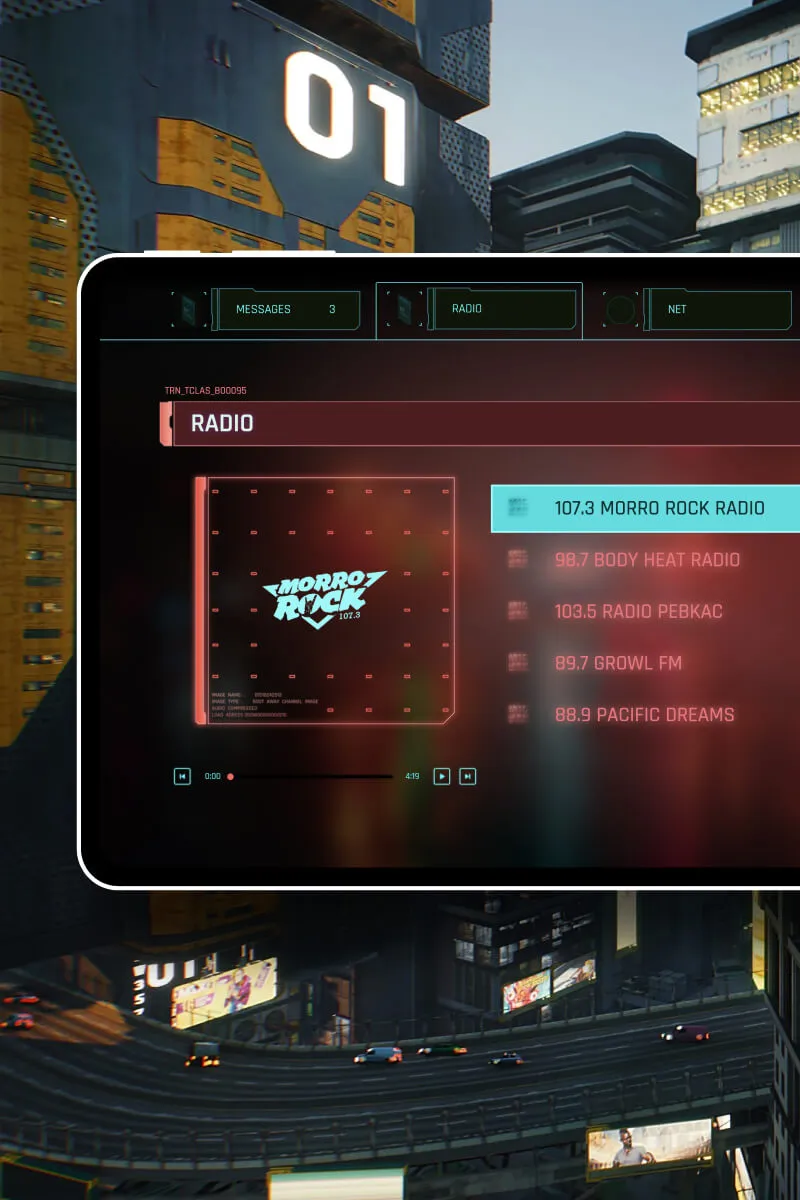
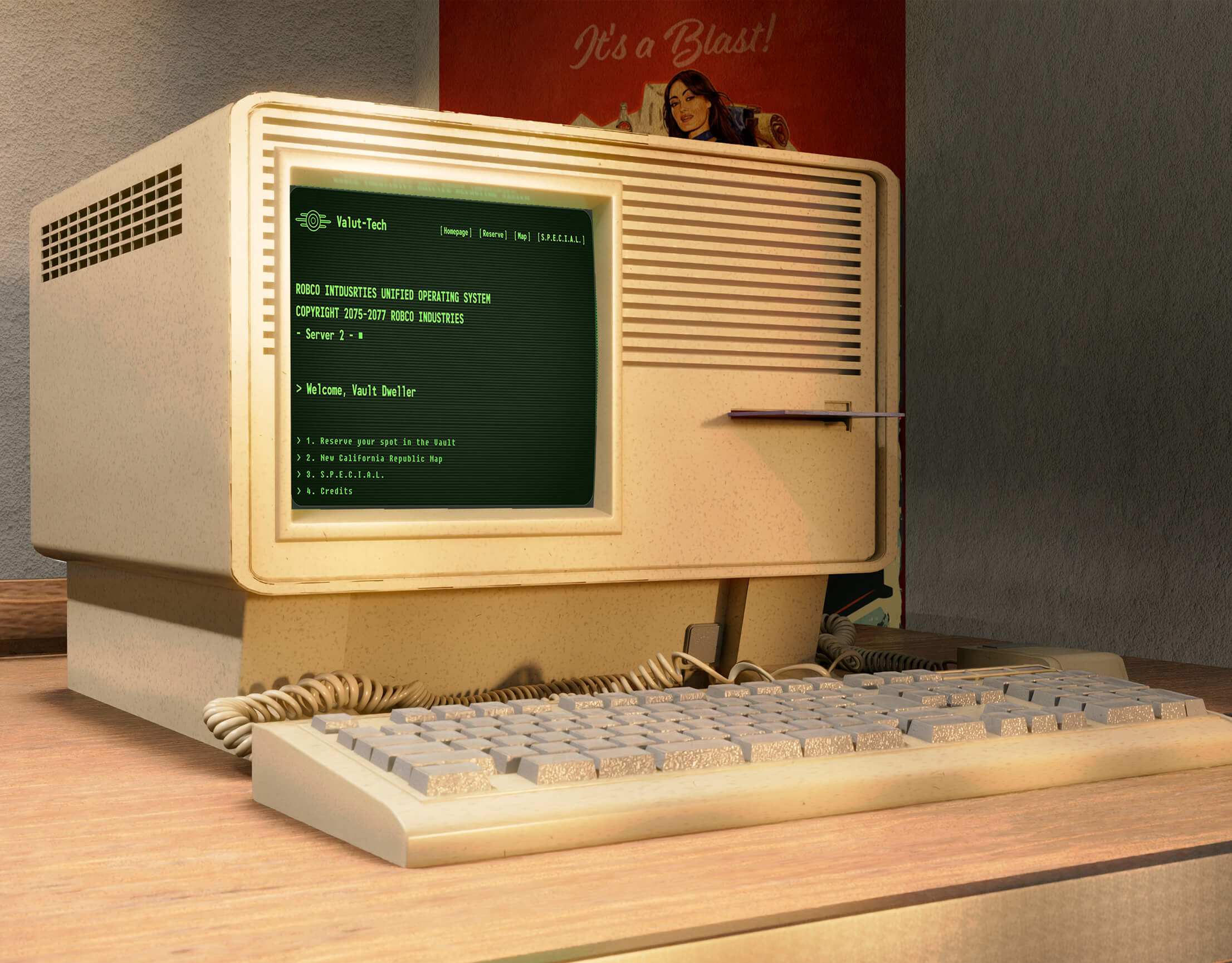
We took the neon terminal UI from Cyberpunk 2077 and made it run in a browser. Then it grew. The terminal became a doorway, and behind the doorway sat a messaging inbox, a five-station radio with a live player, an in-universe NET browser, and a vehicle marketplace called AutoFixer.
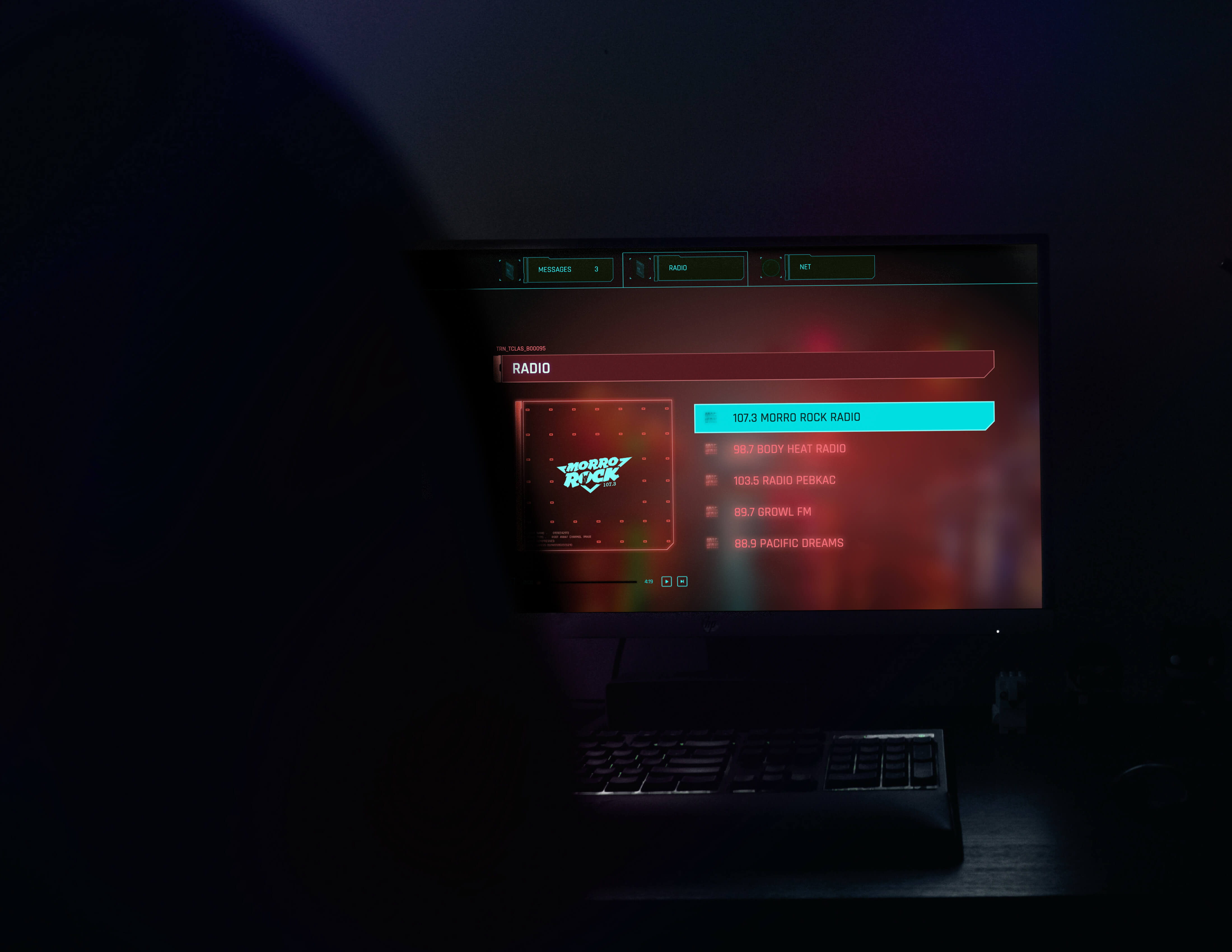
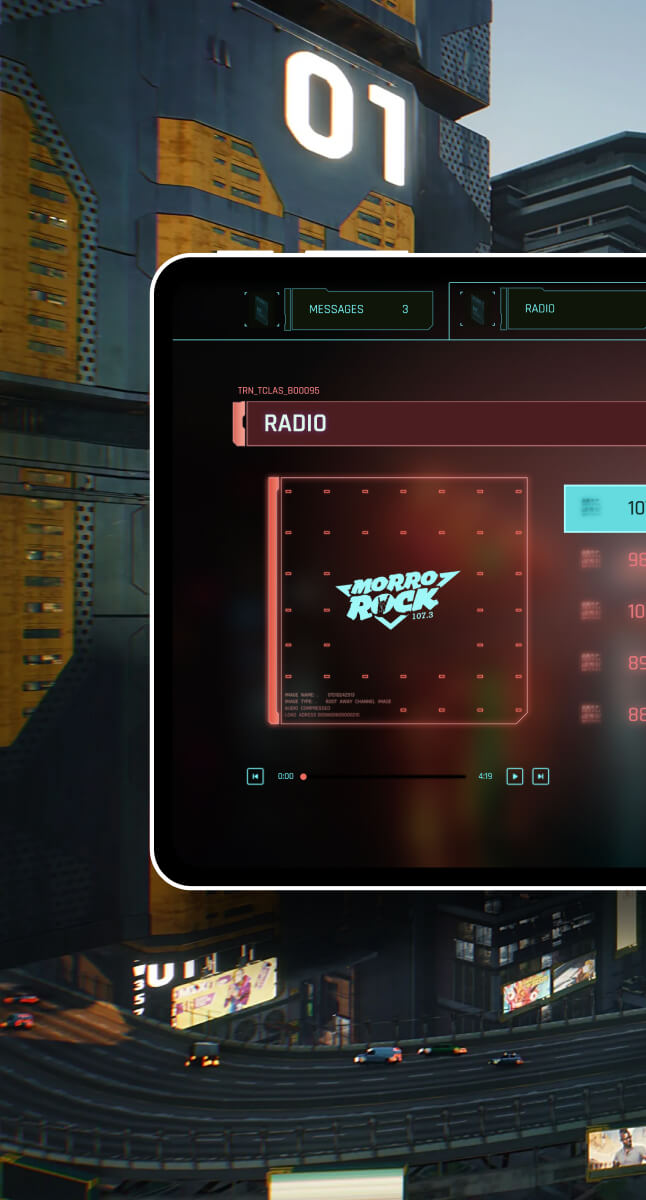
We took the neon terminal UI from Cyberpunk 2077 and made it run in a browser. Then it grew. The terminal became a doorway, and behind the doorway sat a messaging inbox, a five-station radio with a live player, an in-universe NET browser, and a vehicle marketplace called AutoFixer.
This is lab work. No brief, no client, no deadline anyone else set. The studio lab exists for exactly this kind of thing: pick a technique, push it until it breaks, see what holds. The entire build runs inside Webflow. A neon-on-black CRT shell, beveled HUD frames, scanline texture, and a stack of screens that each carry the fiction somewhere new.
The hard part is that a recreation lives or dies on detail. Frame geometry. In-universe copy. The station selector. The vehicle pages. The cold terminal logic running underneath. Miss the glow or the typography or the way a panel responds to a click, and the whole thing reads as a costume. Land them together and you stop seeing a webpage and start seeing the interface.
Two things did the heavy lifting: how the surface looks, and how the world talks.
The surface stays hard. Beveled frames, cyan on near-black, scanline texture, panels that respond like a machine instead of a website. Nothing rounds off. Nothing fades in gently. A terminal is convincing because it behaves like one, so the behaviour came first.
Then there's the language, and this is where most recreations get lazy. Every line of copy belongs to Night City. The NET browser runs on "KEYSTONE," serves addresses like NETDIR://NCITY.PUB, and wears a "powered by NETWATCH" tag. The radio panel stamps album art with fake system metadata. The messages greet you with "Hey Choomba." Drop one generic button or one normal headline anywhere in there and the spell is gone, so nothing generic survived the edit.
The radio is where the recreation stops being a picture and starts working. It's a real audio player wired into the fiction: five channels, transport controls, a scrubber that actually scrubs, and an album-art panel that updates with in-universe readouts while a track plays. The sound isn't sitting next to the interface. It's part of it.
From there the world opens out. The inbox sets the mood through character correspondence. The browser lists a directory of Night City sites. AutoFixer goes furthest, all the way down into a full marketplace. Same recreation, tested from five different angles.
A connected, multi-system terminal experience, all in Webflow.
This is how we keep the craft sharp. The same instinct shows up in the work we ship for clients.
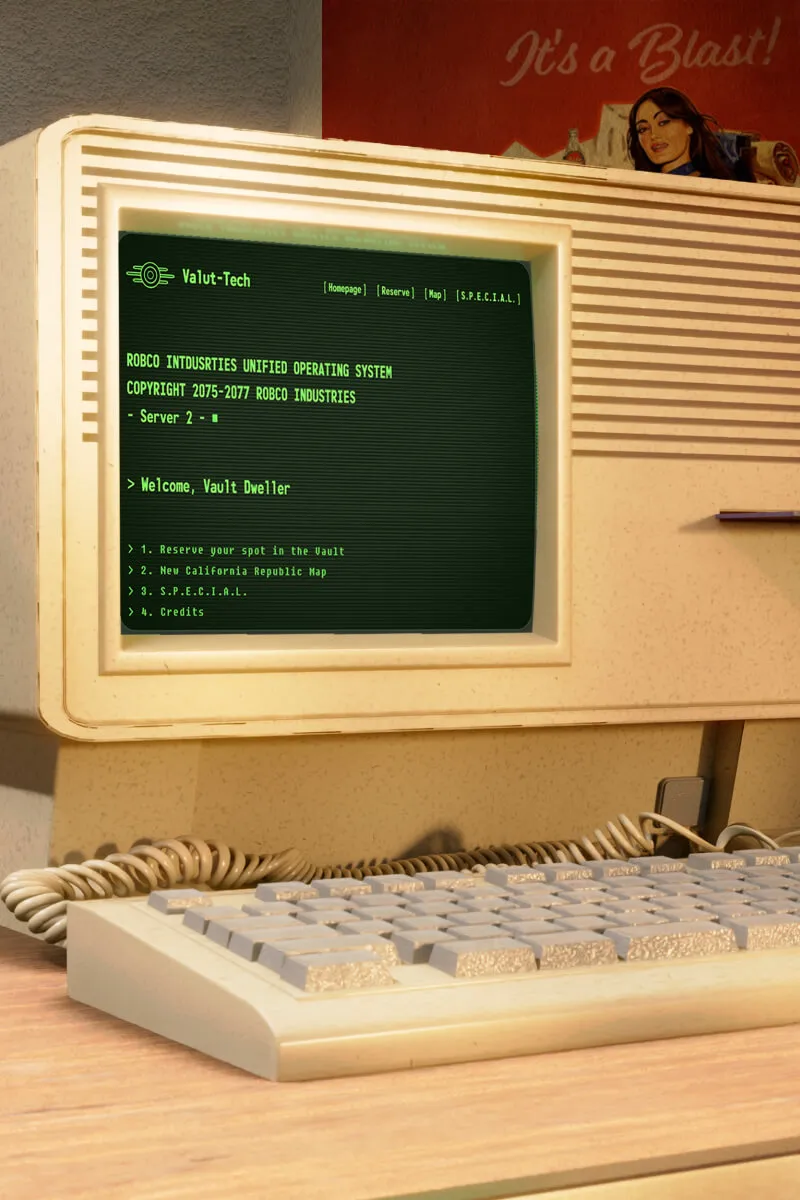

A few details about the project is enough to get the conversation started.



Fueling Brands.
%20(1).svg)