N0VA lives on this site and answers for the studio. Ask it what we build, who we built it for, or whether we've done anything like the thing in your head, and it answers from real studio data, points you to the project that proves it, and stops short of pretending to know anything it wasn't built to know.
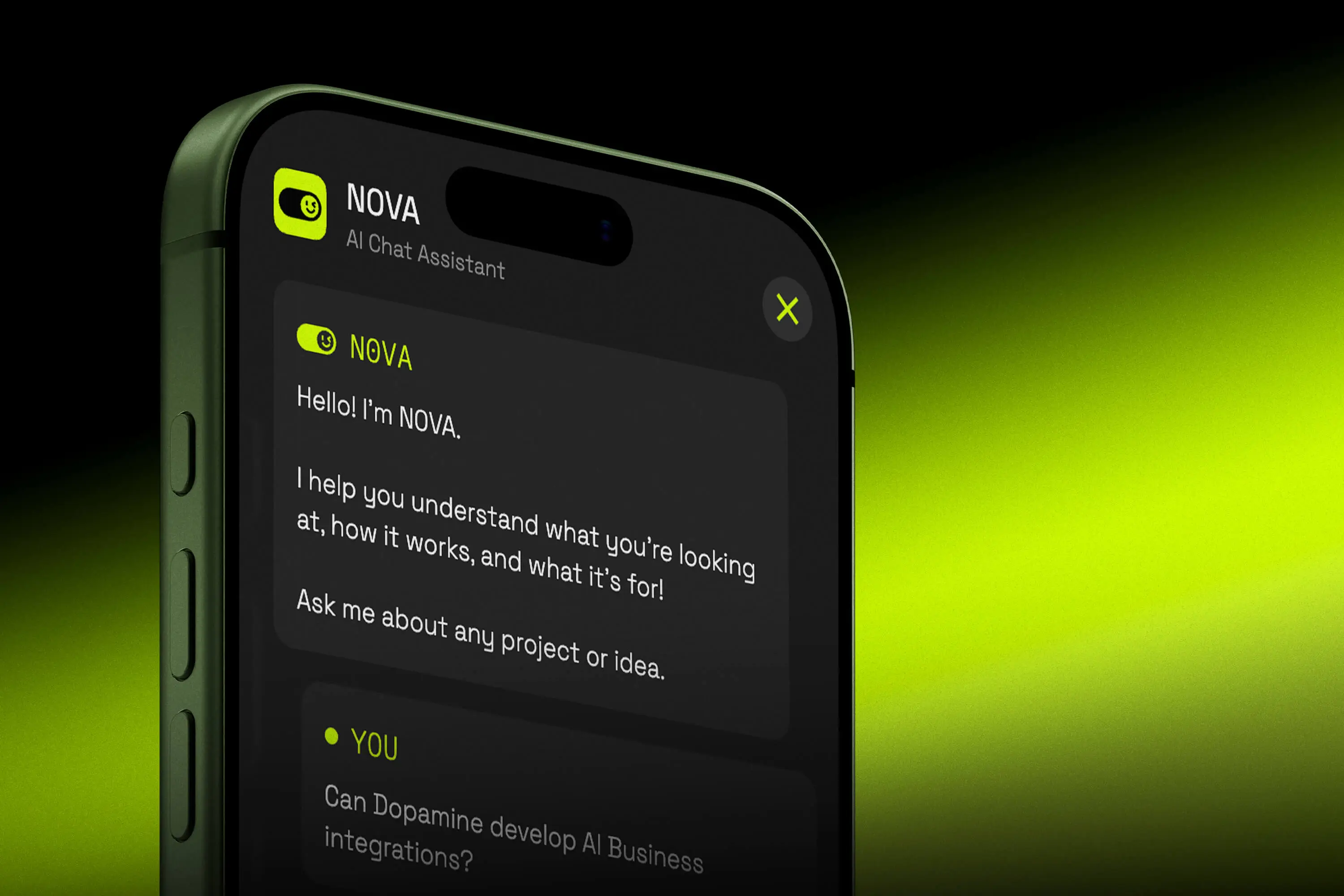
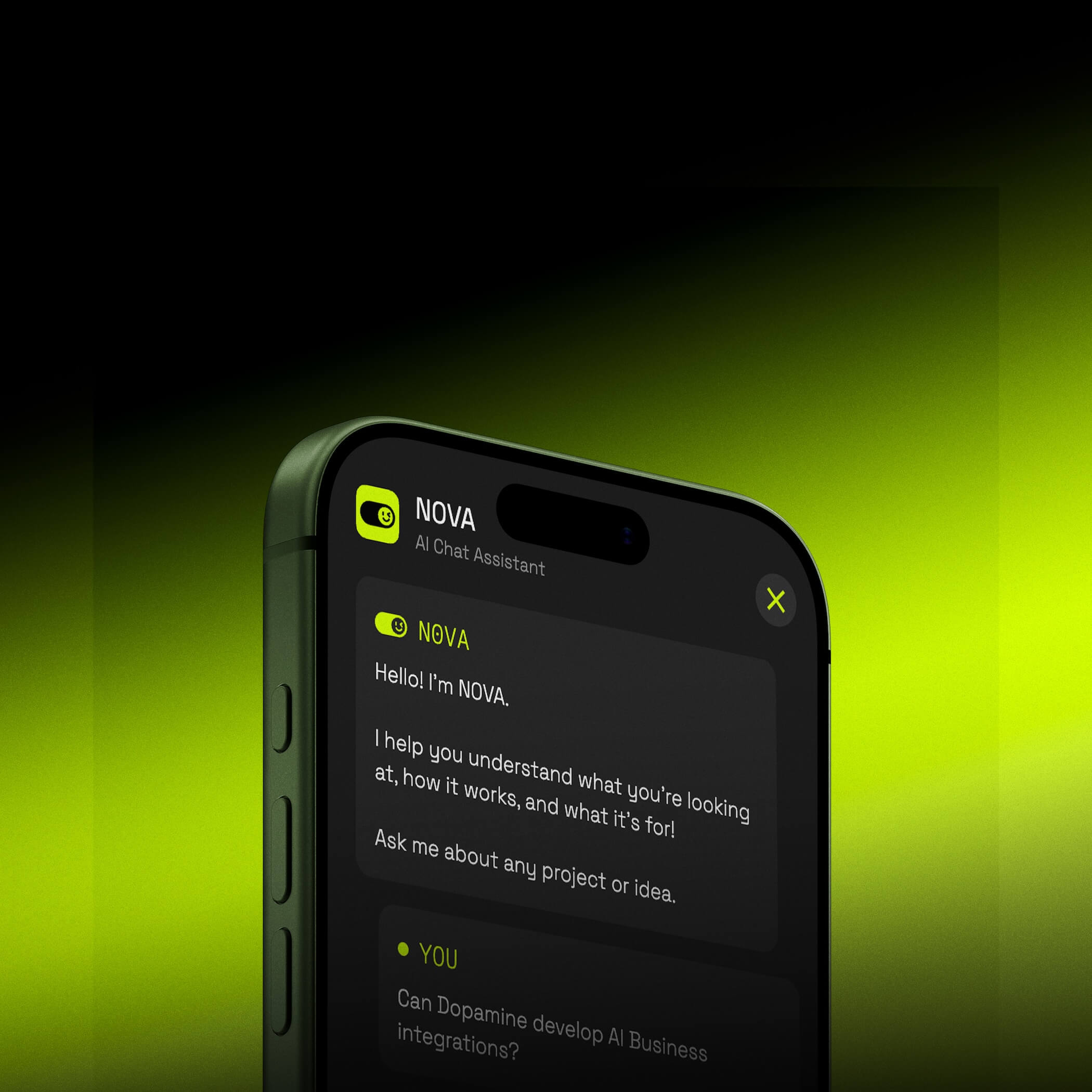
N0VA lives on this site and answers for the studio. Ask it what we build, who we built it for, or whether we've done anything like the thing in your head, and it answers from real studio data, points you to the project that proves it, and stops short of pretending to know anything it wasn't built to know.
N0VA is the studio's own AI assistant, and it doubles as the working proof behind a service we sell. The same engine that runs it is the one we deploy for clients. So this entry is two things at once: a tool that helps people move through the site, and a live demonstration that our AI Business Integration work ships and runs in production rather than sitting in a pitch deck.
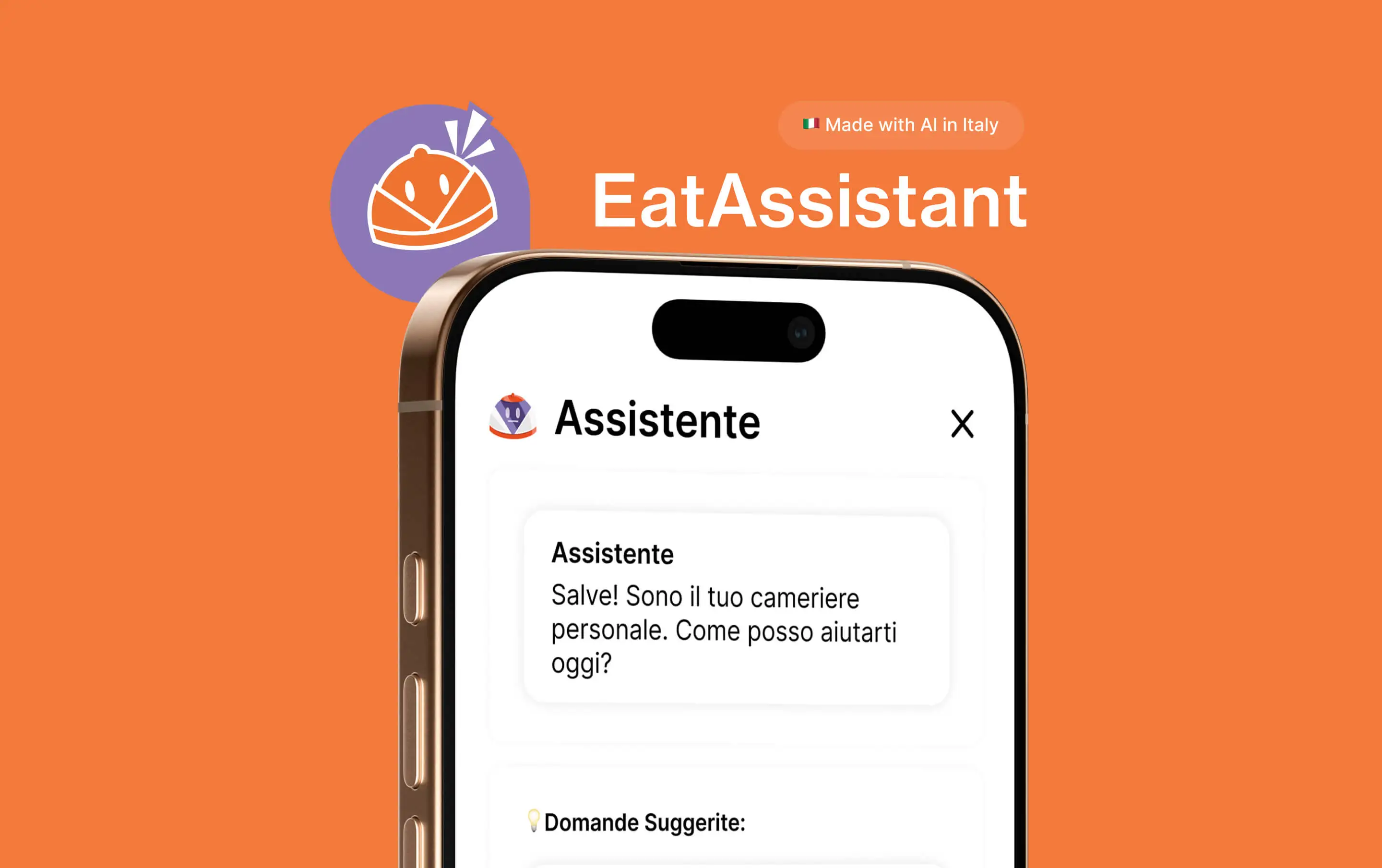
N0VA runs on a RAG architecture built to hold a full working knowledge of the studio at a running cost under one dollar a month. The technical core is the one we built for EatAssistant. The voice and the knowledge base are entirely its own, and the name carries the toggle, straight out of the logo.
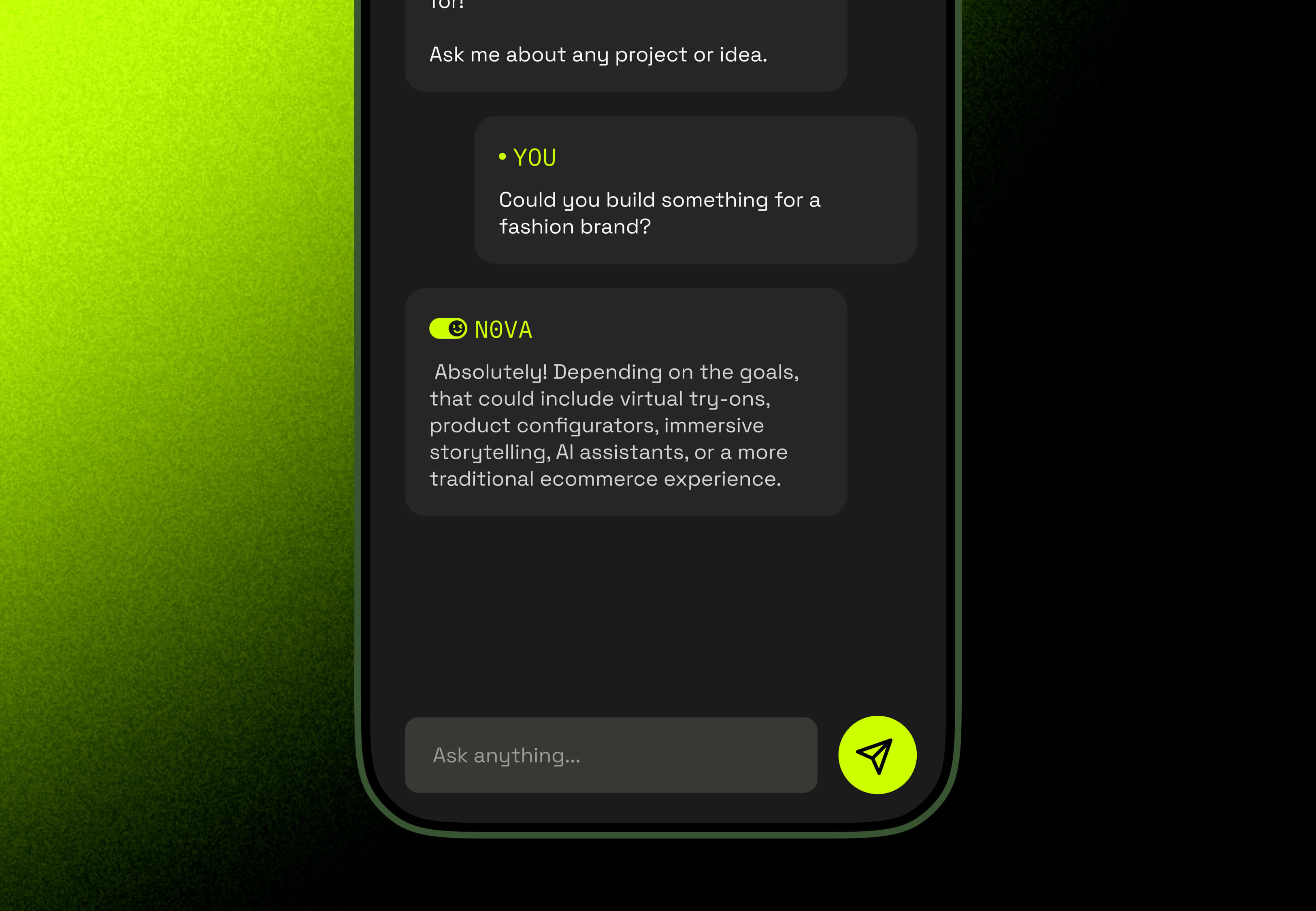
Most site chatbots fail in one of two directions. The scripted kind only answers questions someone anticipated in advance, so the first unexpected phrasing breaks it. The open kind, an off-the-shelf LLM dropped onto a page, will happily answer anything, including things about your business that are wrong, invented, or off-brand. One is too rigid to be useful. The other is too loose to be trusted.
N0VA was built to sit exactly between them. Wide enough to hold a real conversation in natural language, narrow enough that everything it says traces back to something true about the studio. It helps a visitor navigate, explains what 3D web or GEO actually means when they ask, surfaces the project that matches what they're describing, and moves a warm visitor toward a conversation with us. A guide that happens to sell, not a salesman that happens to answer.
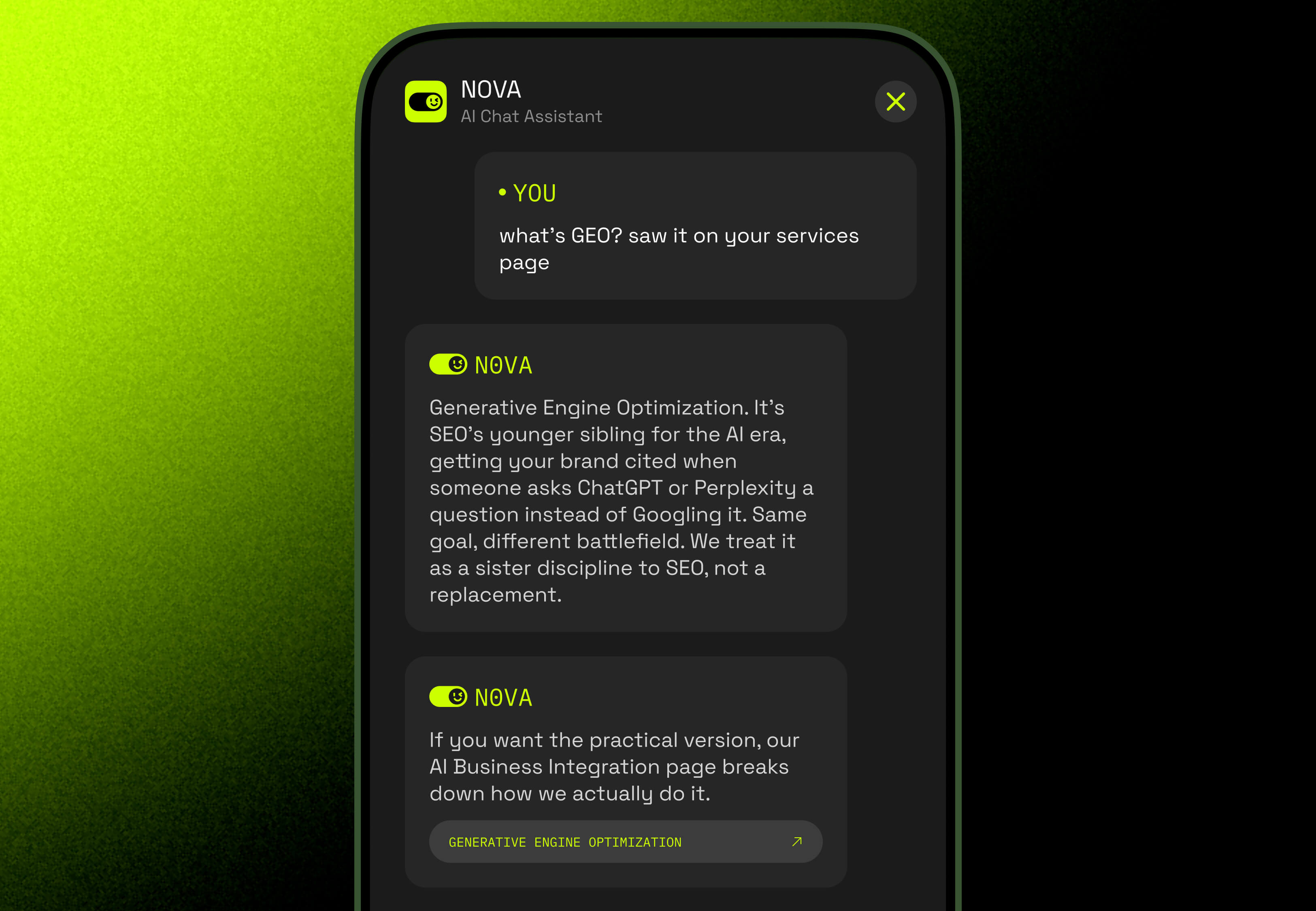
Three calls at the start fixed the shape of everything after. Each one was a deliberate constraint, and the constraints are the point.
Grounded in a fixed knowledge base, not the open model. N0VA retrieves from a closed set of studio content, our services, positioning, offers, and case studies, and answers from that. A raw LLM would have known more about the world and less about us, and it would have filled the gaps with confident invention. On a studio site, an assistant that misdescribes what we do or claims a project we never ran is worse than no assistant at all. Tying it to a fixed base means it can only tell the truth we gave it. The limit is the feature.
A tightly scoped system prompt as the second wall. Retrieval decides what N0VA can draw on. The system prompt decides how it behaves and where it stops. It holds the voice, the boundaries, and the instruction to decline cleanly when a question falls outside its purpose rather than reaching for an answer. Two walls instead of one. The knowledge base keeps it factual, the prompt keeps it in character and in lane.
Model choice matched to the job, not the hype. N0VA runs on OpenAI's API, with the model and reasoning effort picked per task rather than defaulting to the biggest option available. Most of what a site assistant does does not need a frontier model thinking hard. Sizing the model to the actual work, against a restricted knowledge base and a narrow remit, is what keeps it running. N0VA costs under a dollar a month to operate. That number is not a compromise on quality. It's what happens when the scope is honest and nothing is over-specified.
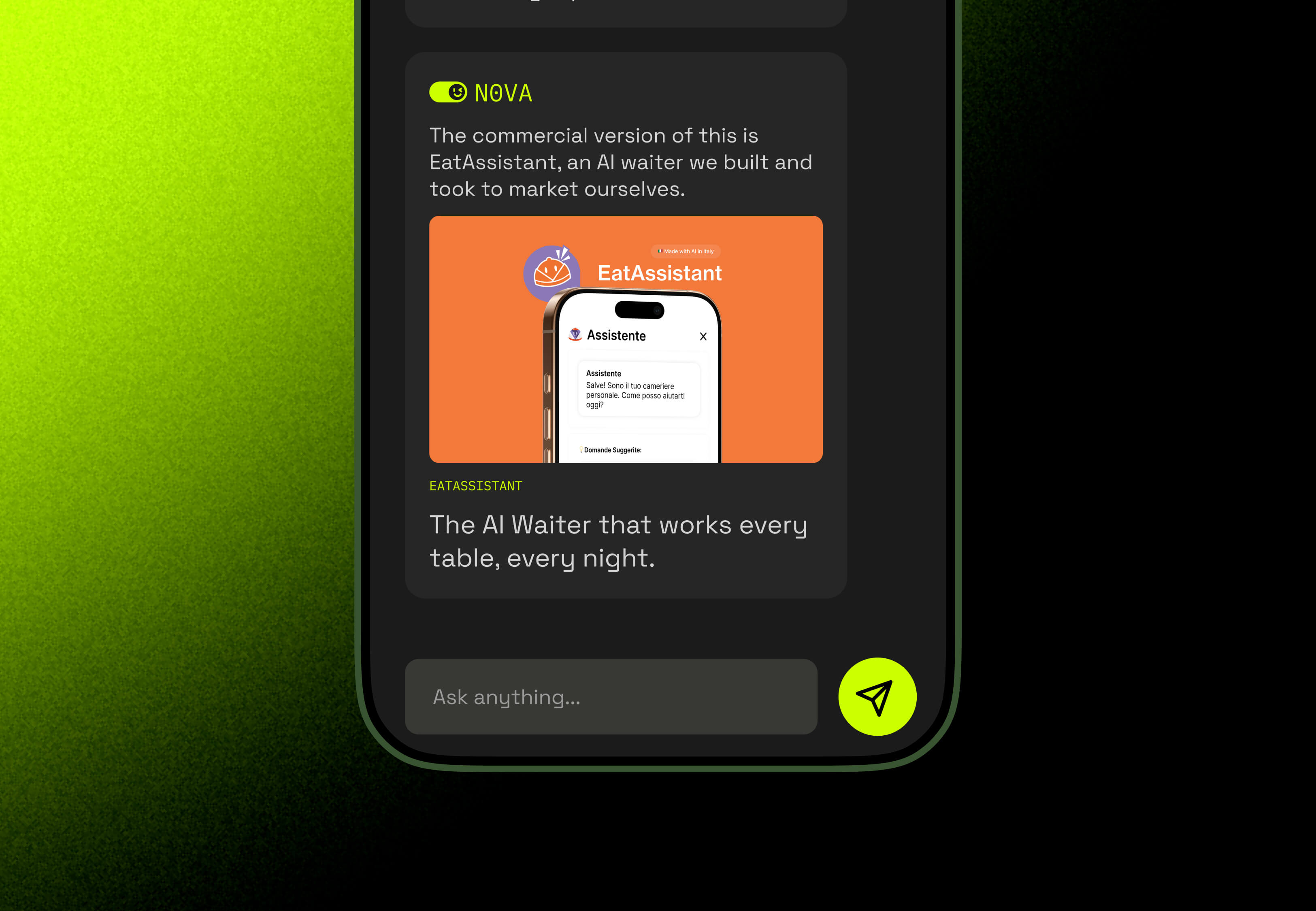
A site assistant that talked like support software would quietly argue against everything the studio claims. So N0VA talks like Dopamine, turned warmer. It keeps the confidence and drops the edge, more colloquial than the website, willing to go into detail when someone actually wants it. It has a bit of attitude and a personality of its own, held on the right side of the line where clarity always wins over character.
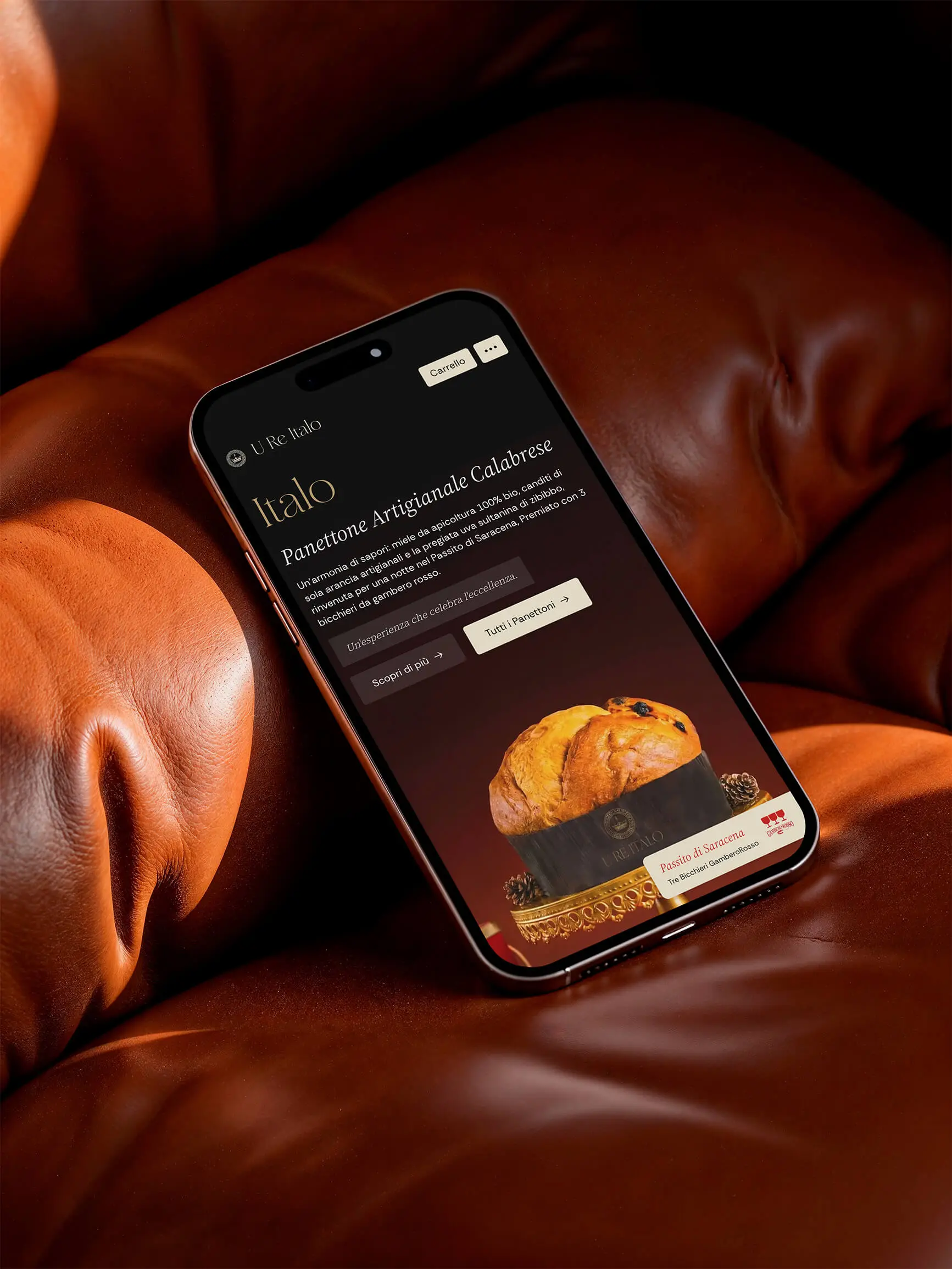
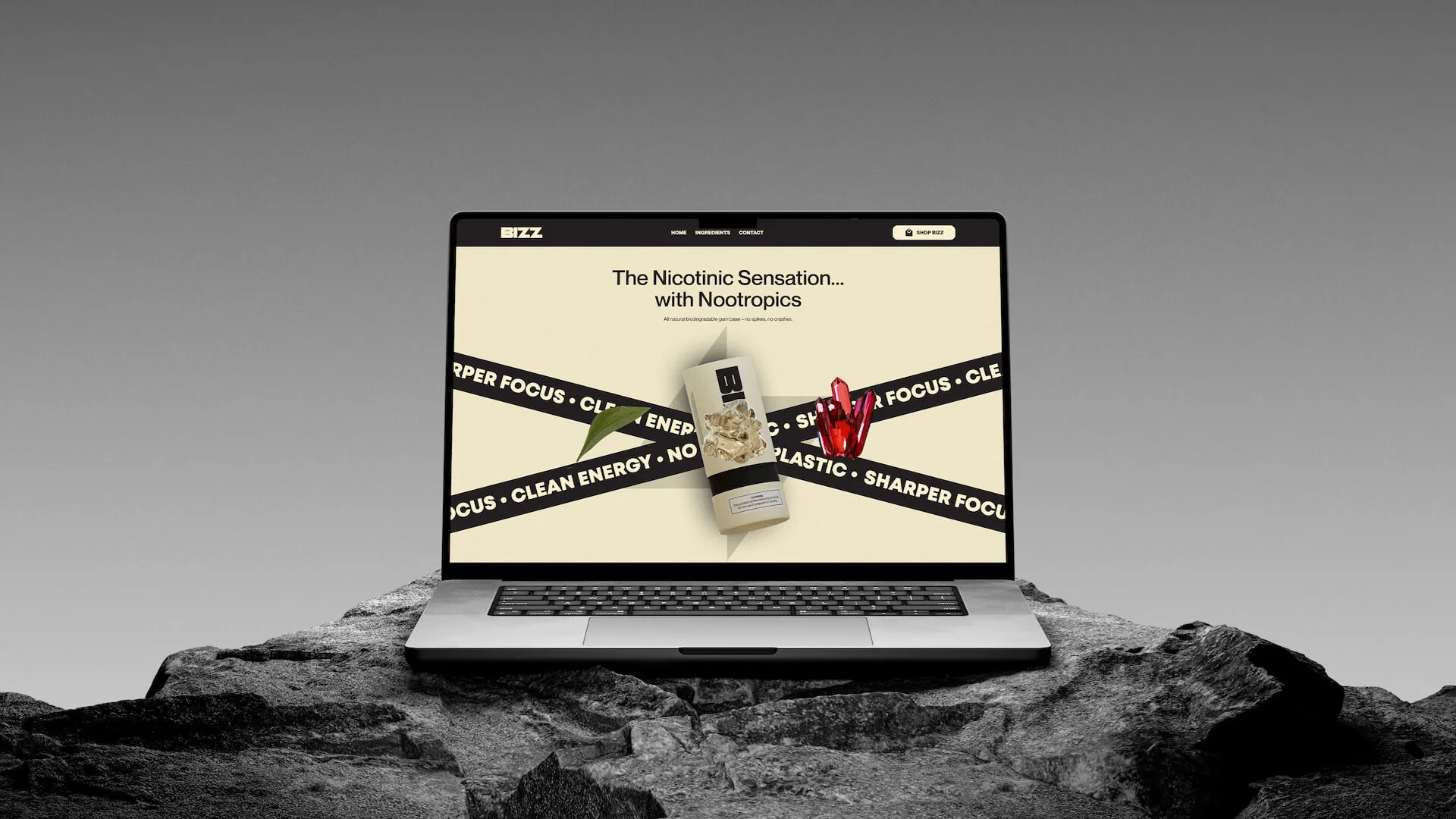
The persuasion works the same way the rest of the studio's writing does, by pointing rather than pushing. When something in the conversation lines up with a project, N0VA mentions it the way a person would. There's a project close to this if you're curious, it's BIZZ, here's the link. It surfaces case studies in context, nudges a qualified visitor toward the contact page, and reads intent before it suggests anything. The upsell is a recommendation from something that knows the catalogue, not a banner.
The honesty extends to the edges. When a question sits outside what N0VA was built for, it says so plainly, that this isn't what it's here for, rather than improvising a half-answer. That candor is partly character and partly economics. Spending tokens to guess at something off-topic serves nobody, so it doesn't.
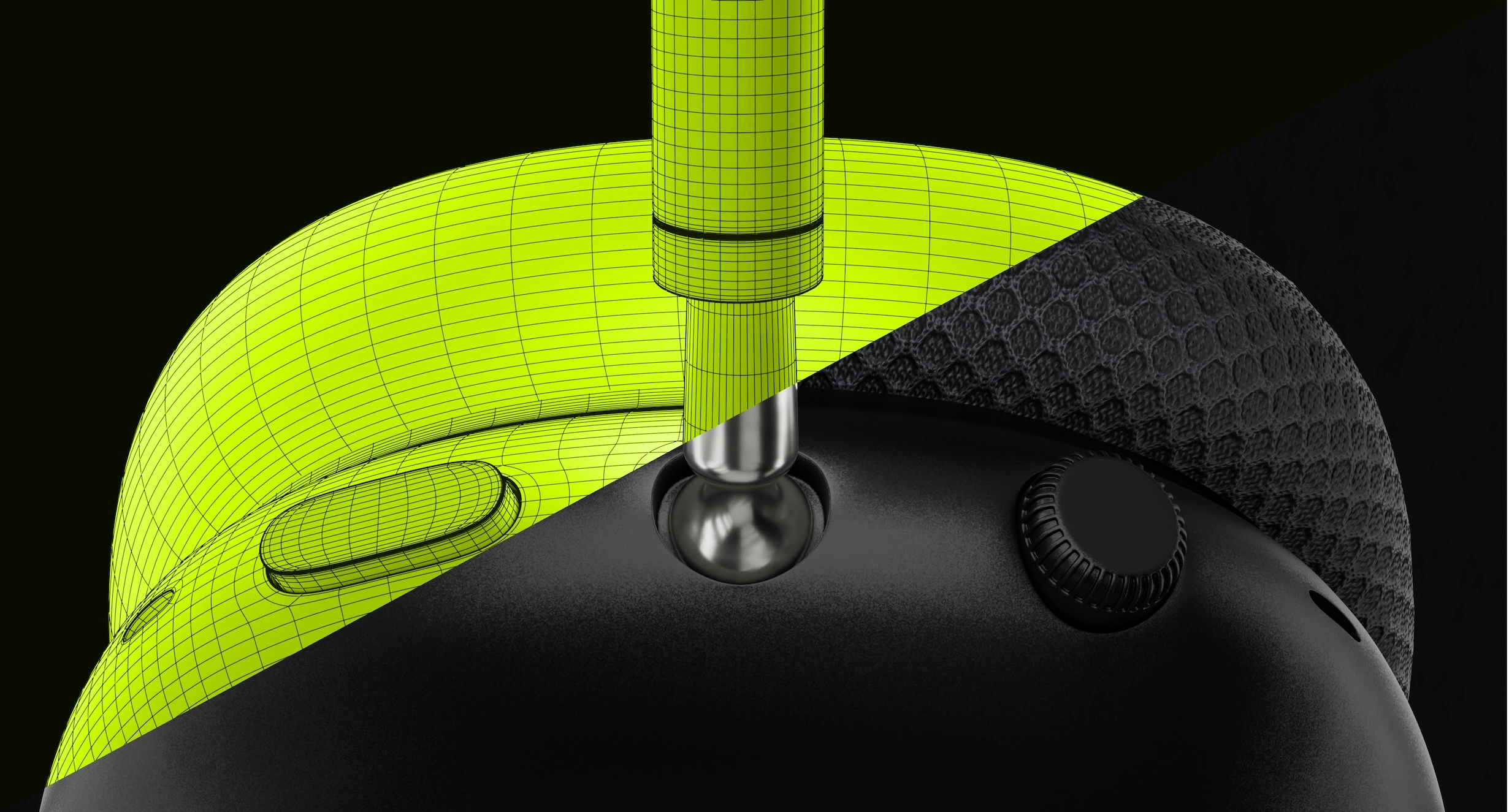
Visually, N0VA was built to feel native rather than bolted on. The toggle-O avatar, the acid-green accent against near-black, the type, all of it reads as part of the site instead of a third-party widget dropped into the corner.
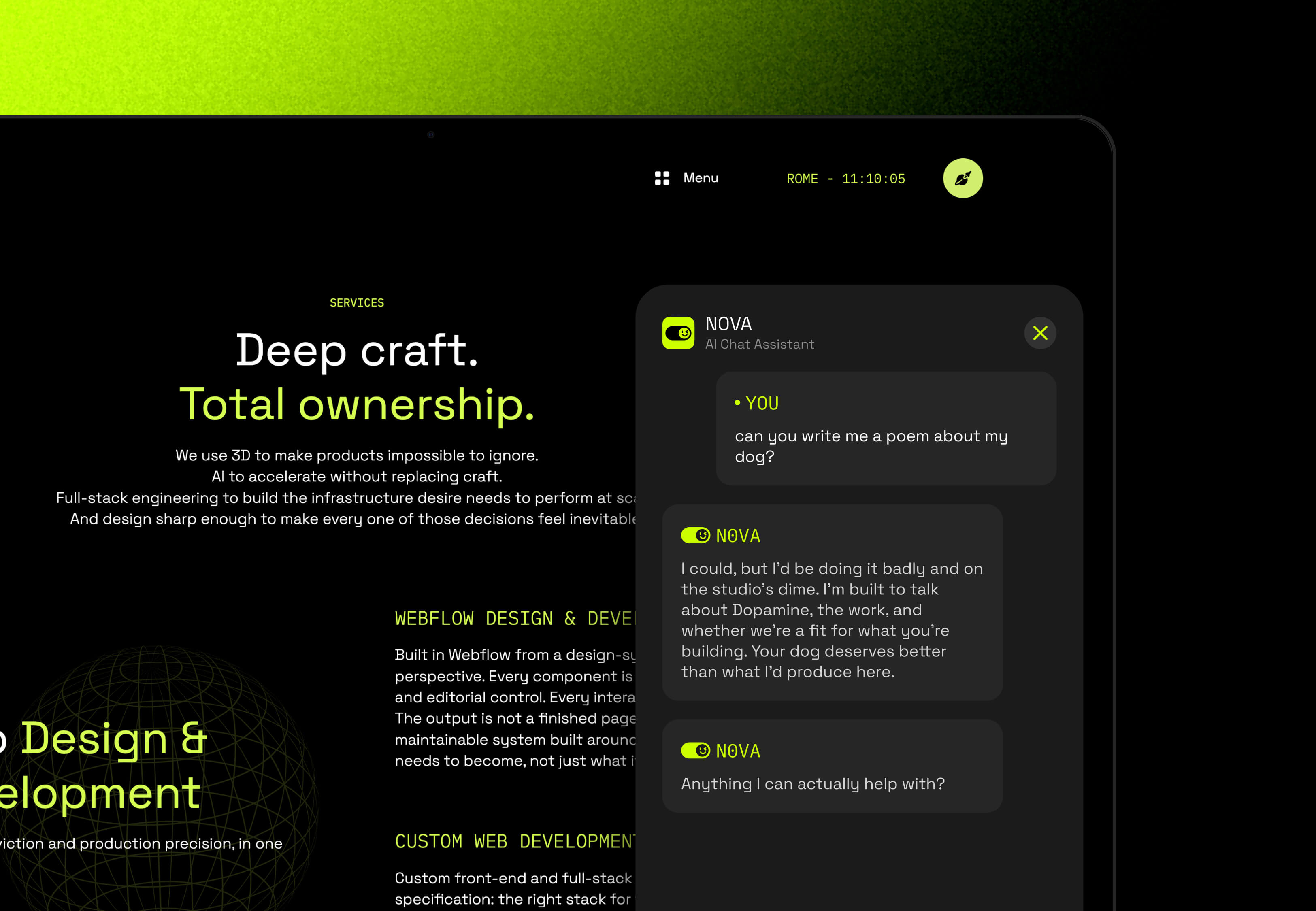
N0VA is what our AI Business Integration work looks like when we build it for ourselves: scoped tight, grounded in real data, cheap to run, and on-brand to the last word. If your business has a knowledge worth making conversational, that's the build we'd start from.

A few details about the project is enough to get the conversation started.



Fueling Brands.
%20(1).svg)