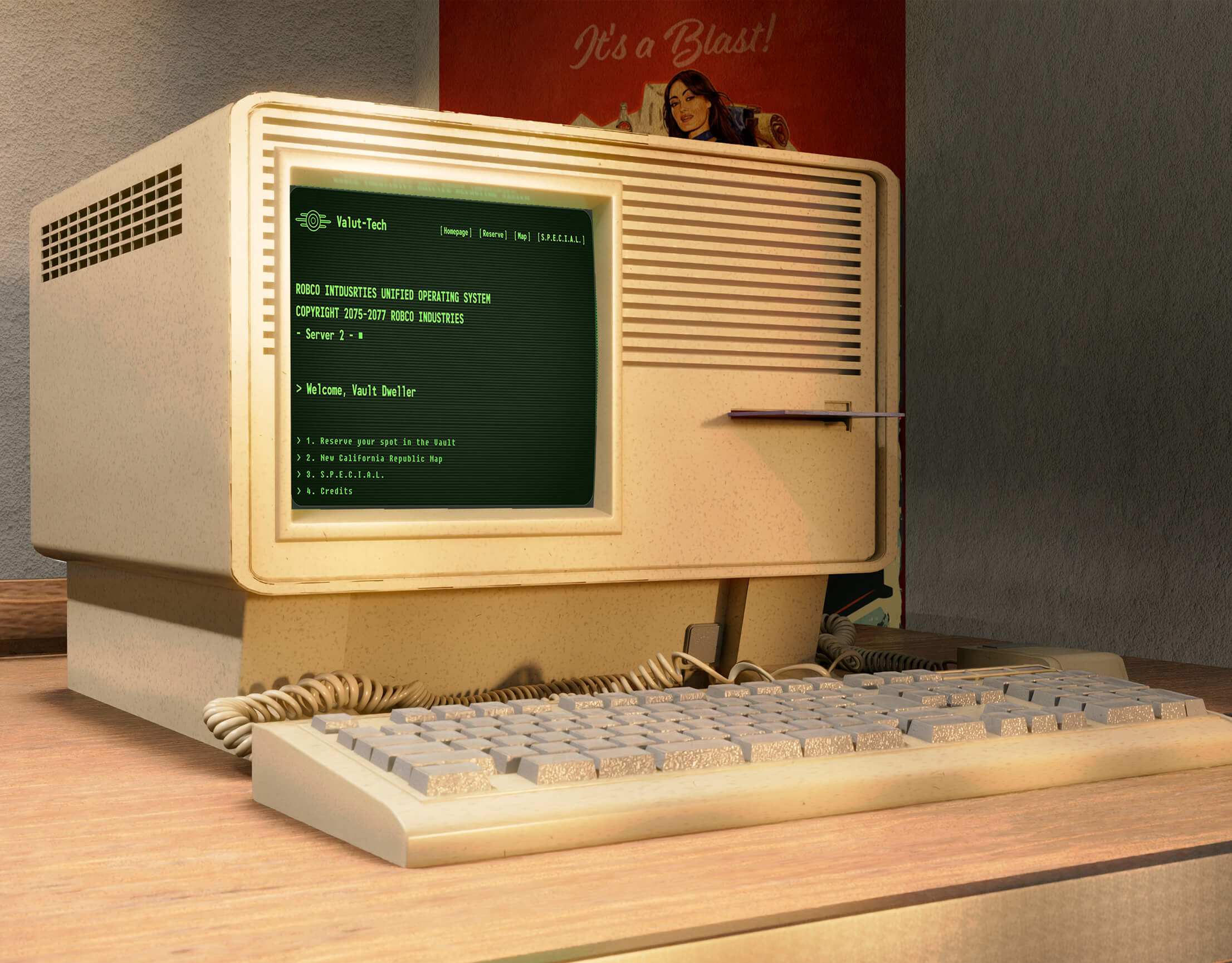
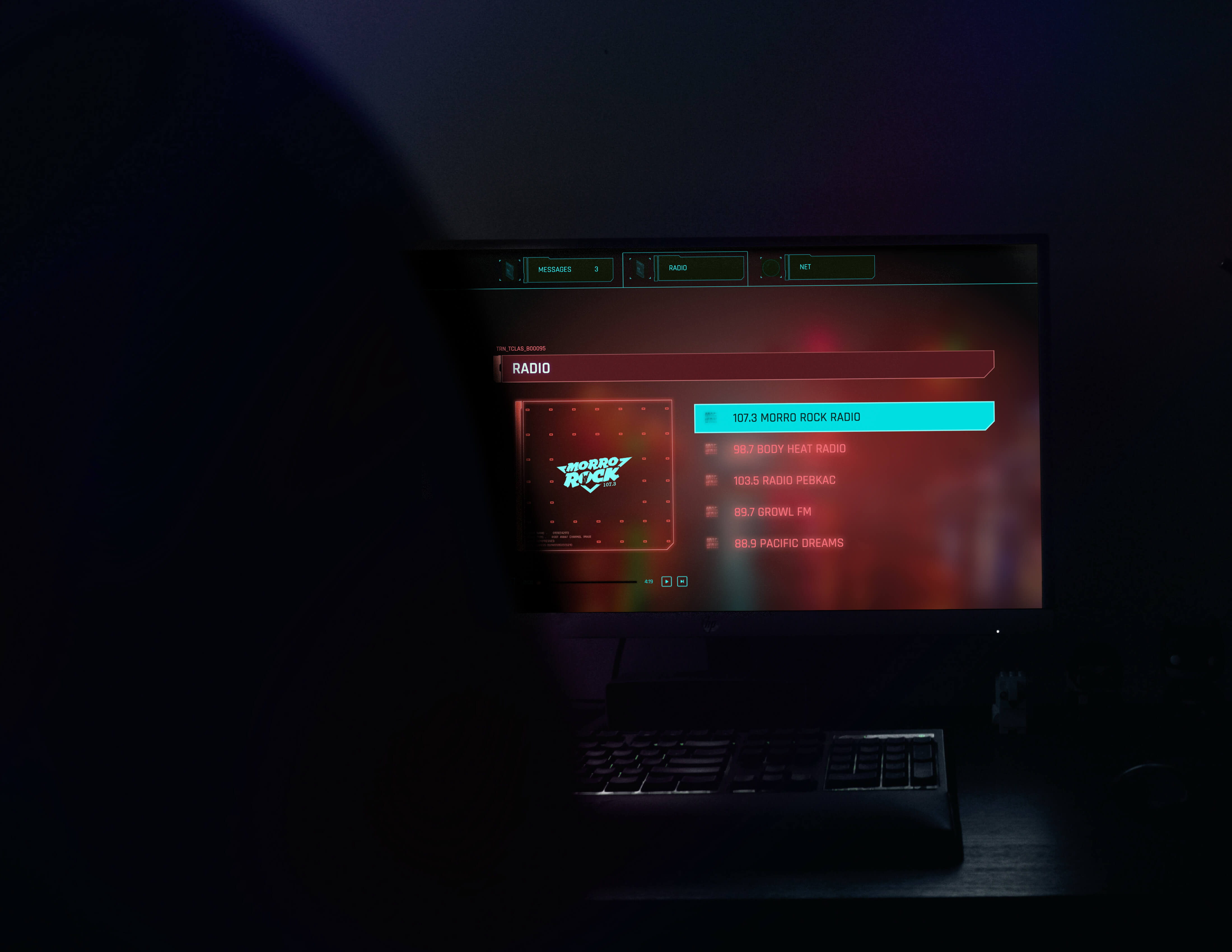
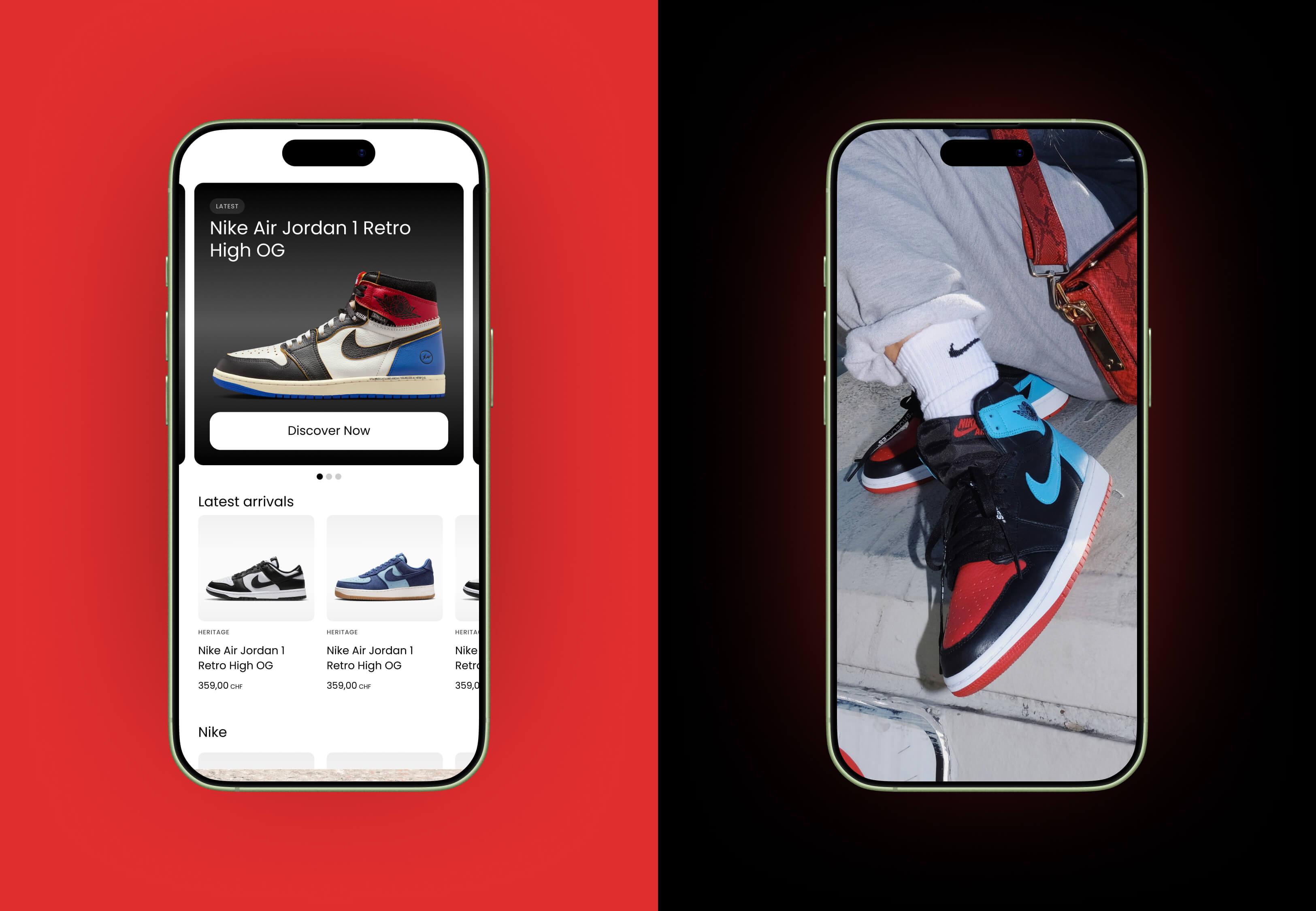
A flat photograph asks the buyer to commit to a shape they have only seen from one angle, on a foot that is not theirs. Sole is the answer the studio built: a shopping app where each shoe renders in real-time 3D you can rotate, and an augmented reality try-on that puts it on your own foot through the phone camera.
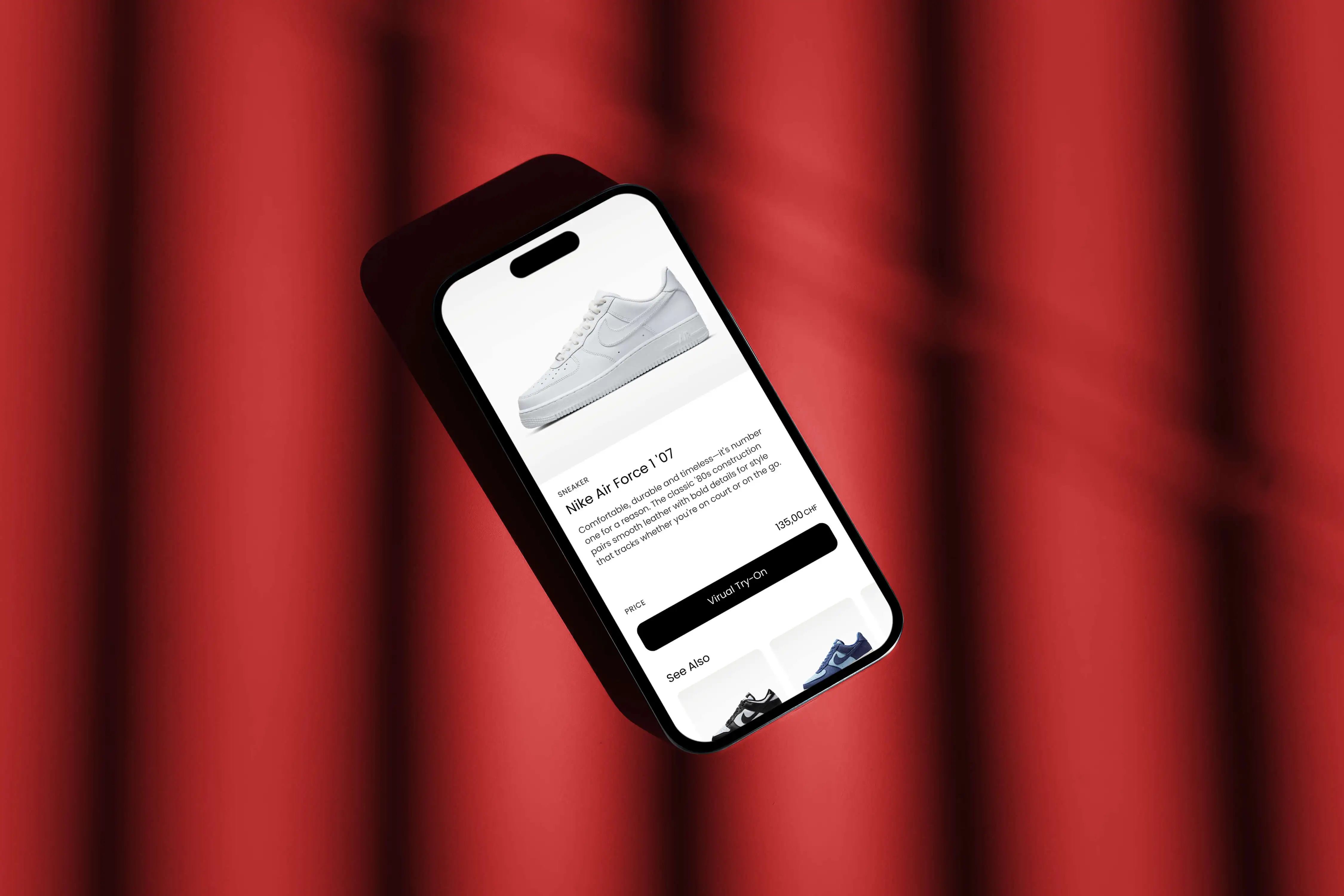
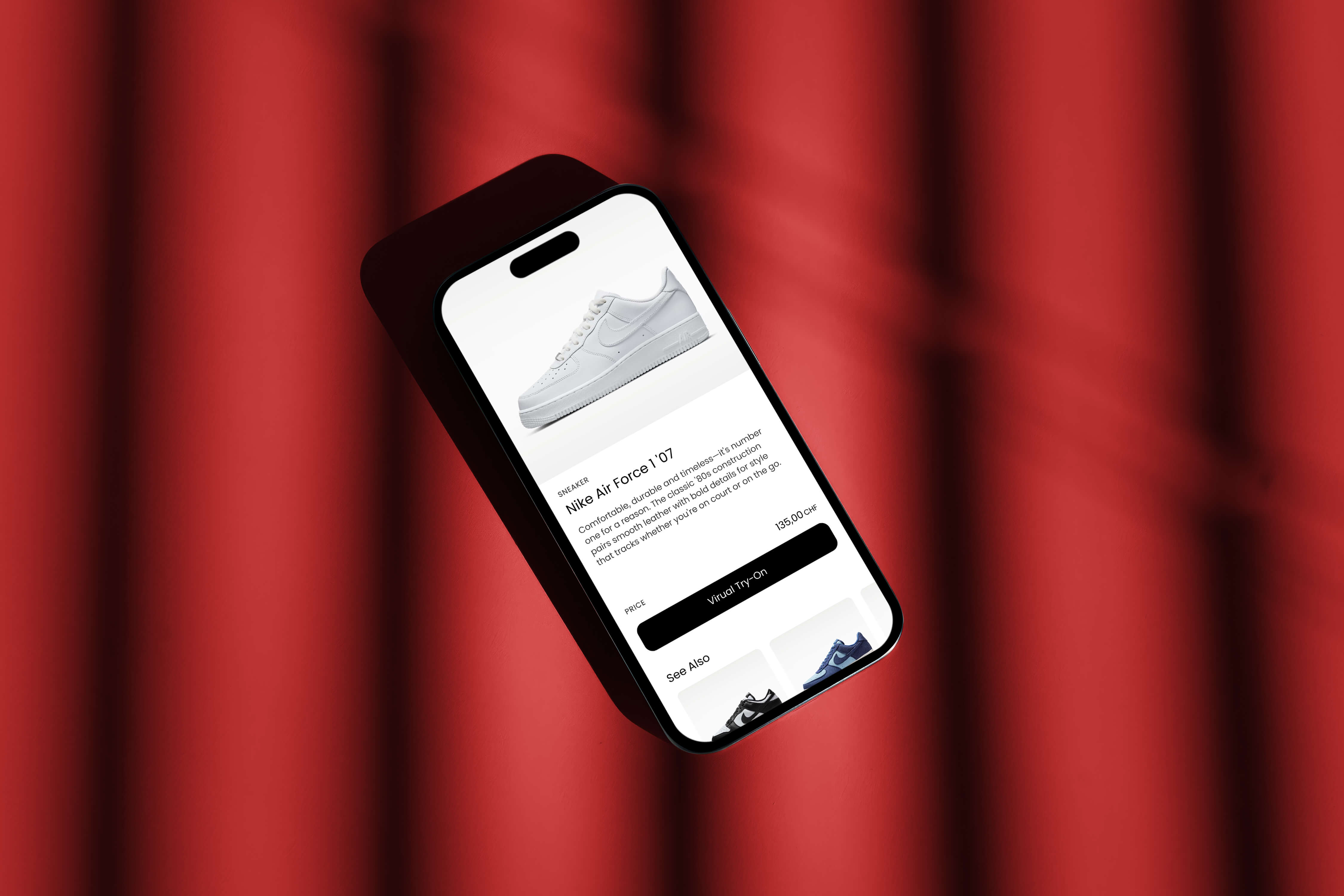
A flat photograph asks the buyer to commit to a shape they have only seen from one angle, on a foot that is not theirs. Sole is the answer the studio built: a shopping app where each shoe renders in real-time 3D you can rotate, and an augmented reality try-on that puts it on your own foot through the phone camera.
A sneaker is a three-dimensional object sold, almost always, as a single retouched still. The buyer is asked to trust a silhouette. They cannot see how the heel sits, how the panel curves, how the proportion reads in the round. For a premium catalog where the product is the reason for the price, that gap is expensive. It is the gap where a cart is filled and then abandoned, where a return is set in motion at the moment of purchase, where a buyer talks themselves out of a shoe they would have loved on their foot.
Two things close that gap. Letting the buyer see the whole object, and letting them see it on themselves. Most retailers do neither, because doing either well is a real engineering problem rather than a plugin. The client wanted both, on a phone, fast enough that the experience never broke the spell.
A few early calls set the shape of everything after. Each one took the harder road for a reason that paid off in how the product felt.
Everything runs locally. The 3D renders on the device. The try-on, built on DeepAR, tracks the foot and composites the shoe on the device. No frame is sent to a server and waited on. That set a hard performance ceiling and the studio designed to live under it, because an experience that stutters while it phones home is one a buyer feels in the body before they can name the cause. Local-first cost more in optimisation up front. It bought an interaction that holds its frame.
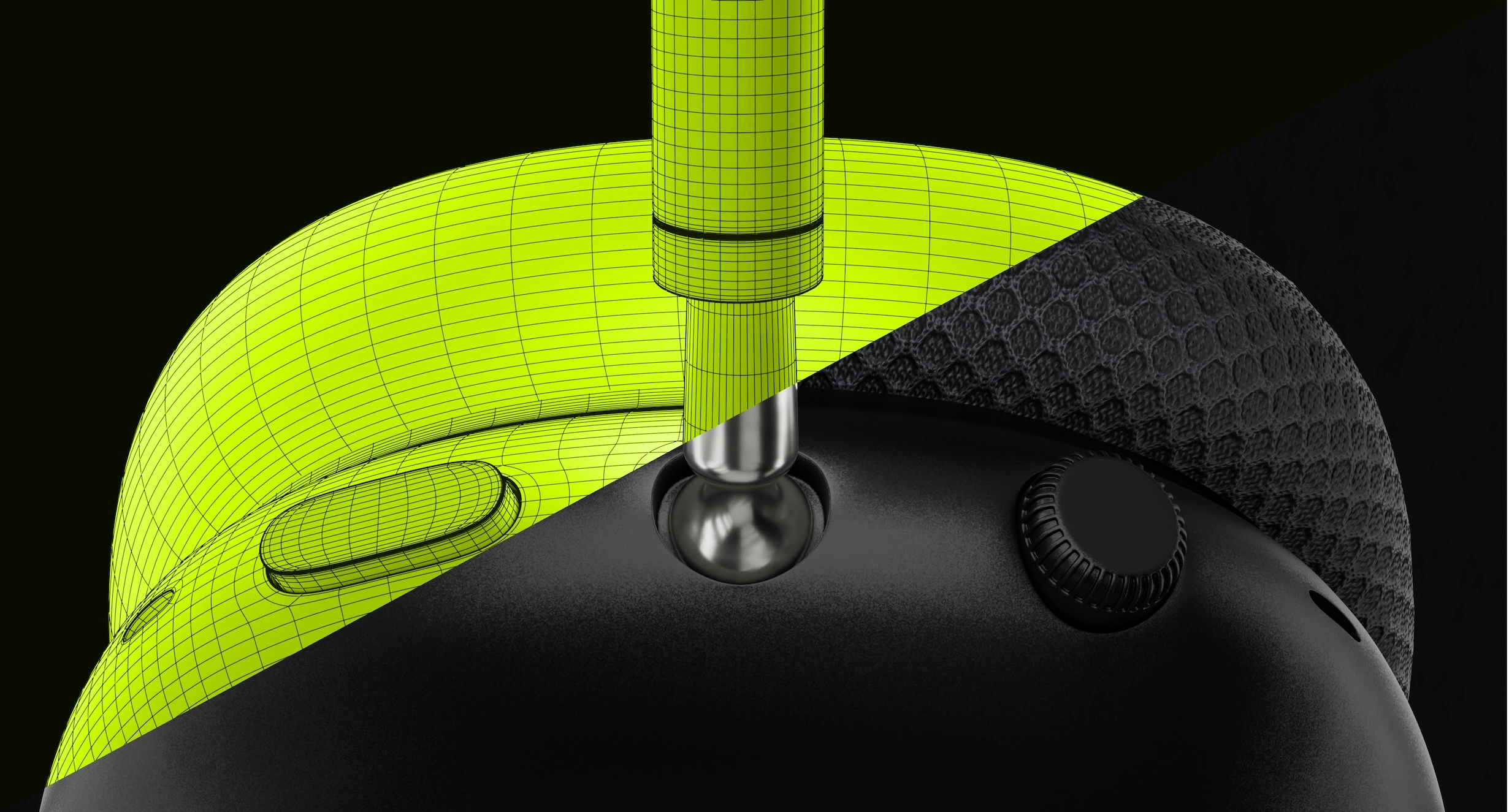
Every shoe is its own model. No shared base mesh stretched into a new silhouette. A high-top and a low-top carry their volume differently, and a buyer who knows the product reads a wrong proportion in an instant. Each shoe in the catalog was built in Blender from the real reference and treated as its own object. Fidelity here was a commercial requirement, not a flourish, because the catalog was real product a real store stocked and the model had to read as that exact shoe.
Realism comes from the textures, not the runtime. Ray tracing was never on the table for on-device rendering. So the light that would have come from an expensive runtime calculation was resolved ahead of time and carried in baked lighting and carefully authored material maps. The eye reads it as real light. The phone reads it as a flat lookup it can afford. Geometry was budgeted the same way, enough resolution to hold a silhouette and catch a highlight on a curved panel, not a polygon more.
.jpg)
Sole shipped as a single-page commerce app with two presentation modes per product and a live AR layer on top.
.jpg)
The store has closed, so there is no live commercial dashboard to report, and inventing one would be the opposite of proof. What the build is engineered to do is the honest claim, and it is the claim worth making.
The store closed. Most agency work ends there, as a screenshot of something that no longer loads. This did not. The try-on and the on-device rendering pipeline the studio built for Sole became Dopamine's own virtual try-on engine, the capability now offered to other product brands who need a buyer to see the thing on themselves before they commit. The client engagement ended. The engineering compounded.
.jpg)
The try-on built here can be yours. If you sell something a buyer wants to see in the round, or on themselves, before they commit, the engine already exists. We bring it to your catalog.

A few details about the project is enough to get the conversation started.



Fueling Brands.
%20(1).svg)